The Physics of Perfection: Green and Lady Poomsae Jins’ Mechanics of Synchronicity
In the world of University Athletic Association of the Philippines (UAAP) Poomsae, the goal is to be a machine. A single tremor, a misaligned toe, or a slight hesitation in breathing can be the difference between a podium finish and heartbreak. For captain and co-captain of the De La Salle University (DLSU) Poomsae Team, batchmates […]
April 22, 2026


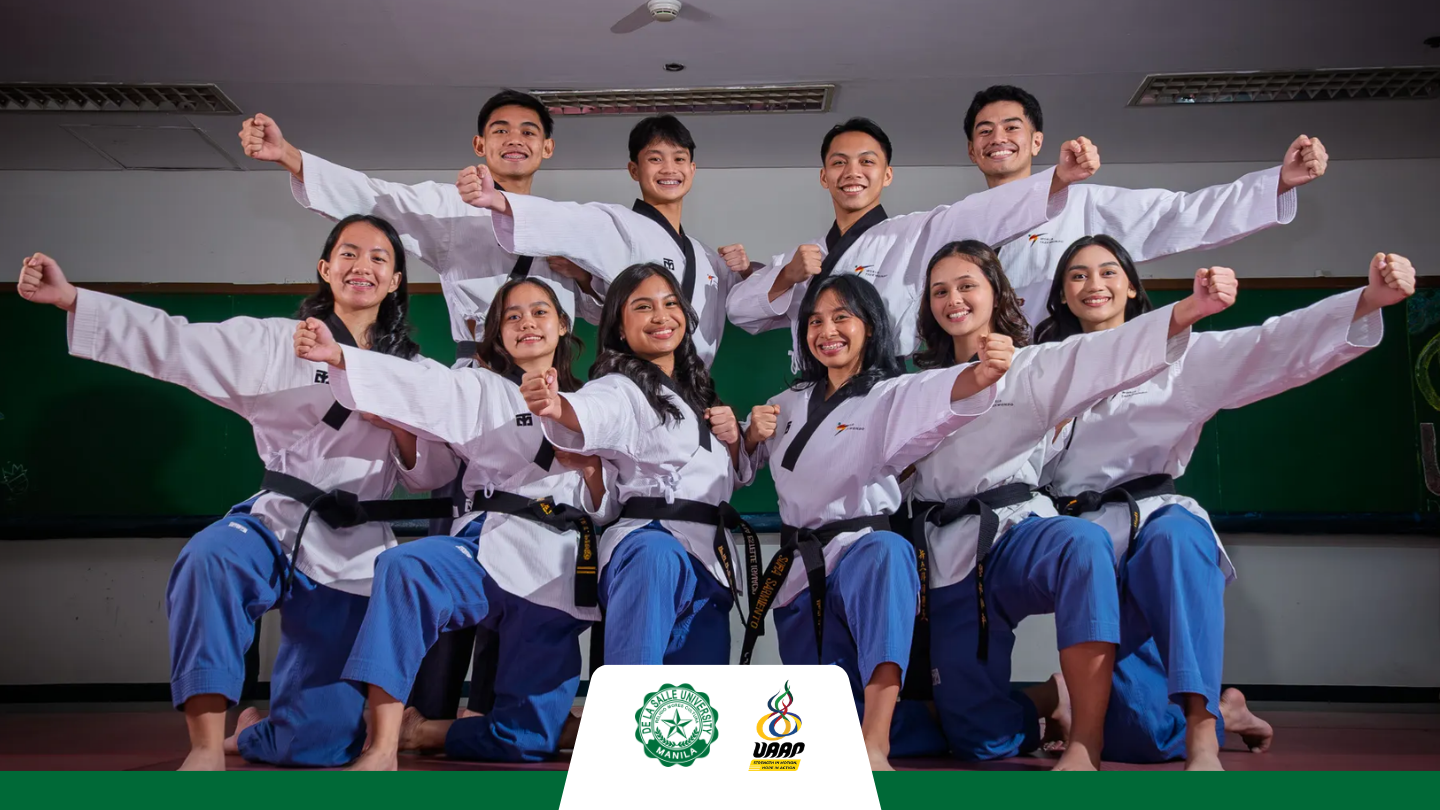
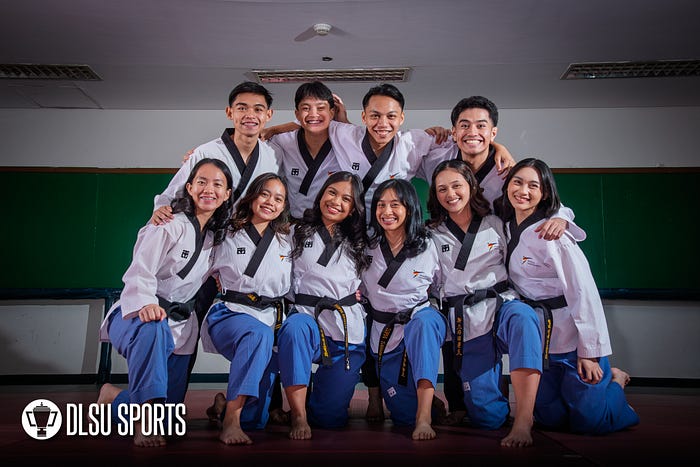
In the world of University Athletic Association of the Philippines (UAAP) Poomsae, the goal is to be a machine. A single tremor, a misaligned toe, or a slight hesitation in breathing can be the difference between a podium finish and heartbreak. For captain and co-captain of the De La Salle University (DLSU) Poomsae Team, batchmates Nathanael Managbanag and Khia Mae Cortez, the perfection seen on the mats is merely the final layer of a complicated, self-managed reality. This season, the Green and Lady Poomsae Jins are not just performing. They are perfecting a signature style of class that will bring out a unique blend of grace and intensity that they believe defines the DLSU spirit.
Potential Energy
The technical foundation of a champion is built during the hidden hours between the early parts of the morning and midnight. For Khia and Nathanael, the day is governed by a firm mindset where every hour is a calculated move to balance an exhausting schedule. They are on the mats by 5:00 AM for a two-and-a-half-hour official session before transitioning immediately to academic classes at the Bro. Andrew Gonzales Hall, which is just across the Enrique Razon Sports Center, where they train.
Additionally, Nathanael pushes through until 8:00 PM for National Team training at the Rizal Memorial Stadium. In this high-stakes environment, recovery is treated as a technical requirement rather than a luxury.
Nathanael notes, “Kailangan ko ng tulog. Wala akong ganang gumawa ng isang bagay if hindi ako nakapag-rest or nakatulog.”
This is why he values planning his schedule, including the times he rests. Without this deliberate recovery, the high-precision movements of Poomsae would inevitably suffer, as cognitive fatigue is often the first thing to compromise a team’s synchronization.
Kinetic Transfer
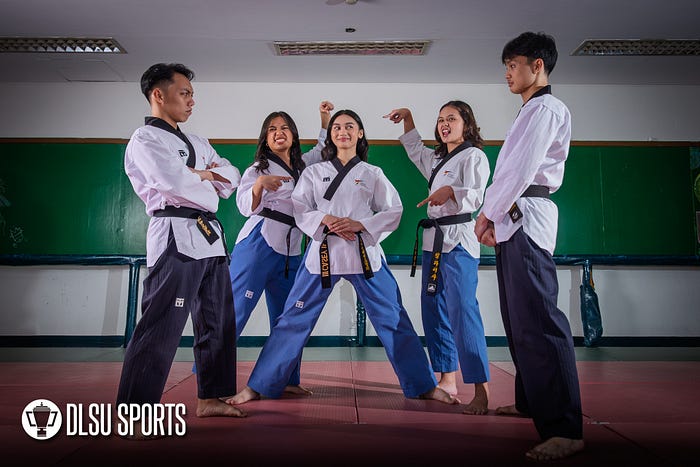
While Nathanael is deep in national drills, Khia Mae manages an equally demanding extracurricular portfolio that extends her influence beyond the collegiate mats. On Wednesday afternoons, she transitions from athlete to instructor, teaching taekwondo to students at the Singapore School. This professional responsibility, which she maintains alongside her batchmate and captain Nathanael’s own international work ethic, adds another layer to their unseen journey beyond the UAAP mats. It is a rigorous extension of the sport that requires them to remain constantly updated and mentally present, proving that, for these captains, the pursuit of excellence is not confined to their own training but also about passing the discipline on to the next generation of practitioners.
Structural Stress
Perhaps the most unique challenge for this squad was the sudden leadership vacuum following Season 87. An exodus of veterans pushed these two into leadership roles while they were still only in their second year, a transition they described as a shock to the system.
“Parang naging senior kami kaagad nung second year namin — super nabigla kami,” Nathanael reflects.
Beyond coaching technical drills, they also became administrators organizationally. Without a student manager, the captains handle the paperwork and requirements that keep the team in check, all while Nathanael draws on his international experience at the Asian Taekwondo Championship in Vietnam to instill a professional work ethic in the younger players.
Unified Resonance
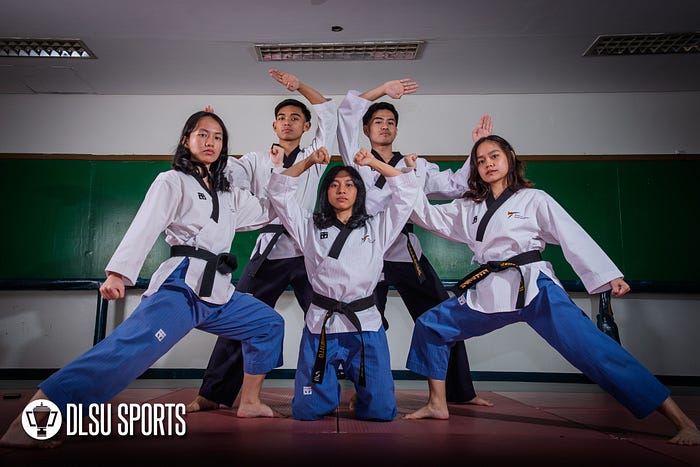
Technical synchronization in Poomsae is often treated as a physical drill, but for this duo, it is a 24-hour biological connection. Because many team members live in the athlete’s dorms or nearby apartments, their synchronization occurs during shared meals and constant open communication. They have moved past being just teammates. They now prioritize getting to know each other’s similarities and differences, strengths and weaknesses, preferences, quirks, nuances, and much more. This bond has become so deep that Nathaniel observes a literal mirroring in their behavior.
“Minsan nga kaming mga boys. Same na kami. Pati tawa, timing na din yung tawa namin. Twenty-four hours na kaming magkakasama,” Nathanael recalled. Khia supported this by mentioning that on the side of the girls, they also bond together and have a culture of openness with each other.
This year, they have intentionally fostered a closer bond to prevent both new and old members from feeling isolated and to ensure that the entire pool moves as a single pulse. They do all this to build predictive trust necessary to stay steady under the pressure of UAAP judging when performing.
Precision Dynamics
The complexity of their preparation matches the tournament’s diversity, which has evolved into a multifaceted showcase of skill. The team must prepare for standard categories, including Individual, Mixed Pair, and Team events, but the modern UAAP stage now demands even more. The captains are preparing the squad for Freestyle events that incorporate music, gymnastics, and tumbling. Success in these events is judged on a razor-thin margin. Judges start with a perfect score, and every minor tremor or timing error results in a 0.1-point deduction. Because the specific forms to be performed are often announced only the day before the competition, the team must maintain mastery of all eight major forms at all times.
Total Equilibrium
Beyond the scores and technical stunts, the discipline of the sport has fundamentally reshaped how these captains view their own lives. For Nathanael, the rigors of hours-long training and late-night organizing have instilled a profound sense of self-discipline that he now carries into his academic career. The requirement to pick up and correct complex instructions on the spot, knowing that a minor mistake results in a technical deduction, has translated into the ability to execute classroom tasks with immediate precision. Khia Mae, meanwhile, views her athletic journey through the lens of character, noting that the sport’s greatest lesson is the necessity of humility. In her view, without a grounded heart, true achievement is impossible, a principle she models as she balances her roles as a student, a captain, and a mentor.
Season 87 ended with a second-runner-up finish, but the captains identified a specific technical flaw. There was a lack of drive and the grit to do extra work. Season 88 is designed to be a statement of reintroduction for the team, breaking the cycle of losing and reflecting. While they recognize rivals like University of Santo Tomas (UST) as confident champions, they embrace the energy of being the underdogs. They have nothing to lose. They aren’t just aiming for a high score. They want to demonstrate La Salle’s uniqueness by performing with a polished class. As they prepare for the season with their coach, Mr. Patrick King Perez, their focus remains on the performance itself.
“Hintayin niyo na lang po kami mag-perform and then yung performance na lang po yung magsasalita para sa amin,” Nathanael ends.
Don’t miss the chance to see the Green and Lady Poomsae Jins bring their year of technical mastery to life. Mark your calendars for April 21, 2026, as our athletes take to the mats at the Rizal Memorial Sports Coliseum starting at 8:00 AM.